
Building stronger portfolio foundations through infrastructure
- Fri 06 February 2026
Electricity and water may not seem exciting, but boring investments can potentially be beautiful over the long term.
Key points
- Infrastructure assets often provide essential services, governed by long-term contracts and regulatory frameworks.
- While the sector is largely characterised by established, long-life assets, the digital age is evolving the infrastructure requirements of modern cities.
- Global listed infrastructure assets can potentially play a more defensive role in portfolios by combining income and potential inflation protection, although interest rate sensitivity remains a primary risk with infrastructure investing.
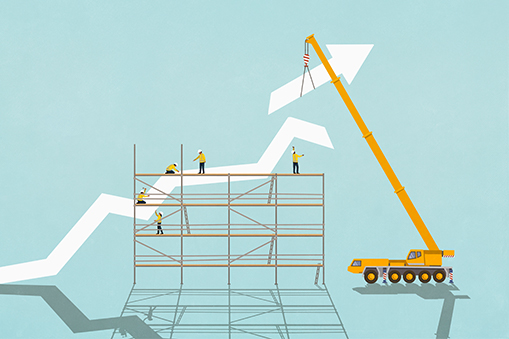
Infrastructure sits at the foundation of economic growth, but the opportunity to gain exposure to these assets can be missed by many investors.
Infrastructure stocks are, frankly, not particularly exciting. They don’t dominate headlines like fast-moving tech stocks. They don’t generate the drama of more volatile assets like Bitcoin. They are not driven by hype, fads, or rapid disruption.
However, 'boring' can have its advantages in the world of investing.
Listed infrastructure companies deliver services that are typically indispensable to modern economies and critical for long-term growth. Electricity grids, transport networks, water systems and communications infrastructure underpin productivity, social cohesion and economic resilience.
Governments, therefore, commit vast sums to the development and maintenance of infrastructure assets each year, providing a steady stream of investment capital into the sector.
Understanding infrastructure
Infrastructure assets are typically monopolistic or quasi-monopolistic within defined geographies, operate under regulatory frameworks, and generate revenues governed by long-term contracts.
For example, most Australian toll roads are owned and operated by one company, with annual toll increases contractually agreed and typically based on the consumer price index in a capital city.
Physical lifespans of these assets often extend from 30 to 100 years – once built, it is rare for these assets to be displaced. For example, cities usually only need one water supply network, one train system or a single internet network.
As an asset class, infrastructure is often characterised by demand that is largely non‑discretionary.
Whether it is electricity consumption, data transmission or freight movement, usage tends to persist across up and down economic cycles. This demand in elasticity underpins the defensive qualities of infrastructure as an asset class.
This, in turn, creates the potential for infrastructure assets to deliver consistent, reliable returns over extended periods – a trait that may attract investors seeking capital growth together with reliable income, and those looking for a hedge against inflation (because many infrastructure contracts, such as those for toll roads, allow for prices to increase at the annual inflation rate).
This sector also attracts institutional investors . Pension funds, family offices and sovereign wealth funds have been increasing their portfolio allocations to infrastructure [1].
Australia’s sovereign wealth fund, the Future Fund, has made significant investments in infrastructure, according to its latest portfolio update, stating that the asset class is a means of enhancing portfolio resilience, managing inflation risk and reducing exposure to currency volatility [2].
Evolving scope of infrastructure
The transition to cloud computing, the rise of artificial intelligence and explosion of digital currencies are rapidly increasing the global demand for power and data storage, and this is expanding the universe of essential assets required by modern cities.
In particular, the infrastructure that underpins the energy complex is at an inflection point, attracting vast swathes of capital from governments and private enterprises, driven by the need for increased electricity to power the new data age and the transition to clean, renewable energy sources.
For example, China invested more than US$625 billion in clean energy in 2024, with that investment characterised by large-scale infrastructure projects [3].
Recognising that power supply will be crucial to meeting the future demands of artificial intelligence, many big tech companies are securing their own sources of power, often investing billions of dollars in new infrastructure.
Google [4] and Amazon [5] have both committed to funding new nuclear power sites in the US, while Microsoft has partnered with Constellation Energy to reopen a reactor in Pennsylvania under a 20-year power purchasing deal that also includes a US$1 billion investment from the US Government [6].
According to estimates from McKinsey, a cumulative US$106 trillion will be needed through to 2040 to meet the need for new and updated infrastructure globally [7].
Global opportunity
Historically, Australian infrastructure was largely funded, owned and operated by government. Over time, fiscal constraints and policy shifts have opened the door to private capital through public-private partnerships, privatisations and long-term concessions. Assets such as airports, toll roads and ports have attracted domestic and offshore investors.
For everyday investors, direct ownership of infrastructure assets is impractical. Listed infrastructure equities, however, may offer a liquid and accessible alternative. These companies own, operate or manage infrastructure assets and distribute cash flows through dividends.
The challenge for Australian investors is scale. The domestic listed infrastructure universe is narrow, dominated by a small number of large names, with the majority of assets privately held.
Global markets offer a broader opportunity set. Listed infrastructure companies in the United States, Europe and Asia provide exposure across sectors such as regulated utilities, transportation, communications and specialised real estate.
Building infrastructure into a diversified portfolio
Global infrastructure companies may form a minor or ‘satellite’ allocation within a portfolio.
According to Modern Portfolio Theory, building a portfolio with uncorrelated assets (assets whose returns do not tend to move together in the same direction) is important for diversification and can lower the overall risk of their portfolio while maintaining the return expectation.
Infrastructure securities may provide investors with diversification benefits as a complement to their existing exposure to Australian equities, international equities or international fixed income investments.
Historical correlations between global infrastructure and selected asset classes are shown in the following table. A value close to 1 indicates a strong positive correlation. A value close to 0 indicates little or no correlation.
Global infrastructure’s correlation to traditional asset classes
| Asset class | Global infrastructure (hedged) | Australian equities | Global equities | Australian property | Australian bonds | Global bonds |
|---|---|---|---|---|---|---|
Global infrastructure (hedged) | 1.00 | |||||
Australian equities | 0.69 | 1.00 | ||||
International equities | 0.51 | 0.66 | 1.00 | |||
Australian property | 0.70 | 0.85 | 0.62 | 1.00 | ||
Australian bonds | 0.27 | 0.25 | 0.32 | 0.41 | 1.00 | |
Global bonds | 0.51 | 0.37 | 0.30 | 0.53 | 0.81 | 1.00 |
Data to December 2025. Source: Morningstar Direct. Ten-year correlation to end-of-month. Results are calculated monthly and assume immediate reinvestment of all dividends. You cannot invest in an index. Past performance is not a reliable indicator of future performance. Indices used: Global Bonds – Barclays Global Aggregate Bond Index A$ Hedged, Australian Bonds – Bloomberg AusBond Composite 0+ years, Global Infrastructure – FTSE Developed Core Infrastructure 50/50 Index Hedged AUD, Australian Property – S&P/ASX 200 A-REITs Index, International Equities – MSCI World ex Australia Index, Australian Equities – S&P/ASX 200 Index.
Know the risks
As with any investment, understanding the drivers of returns and the associated risks of infrastructure investing is essential. Rising interest rates can compress valuations of infrastructure assets and increase their cost of capital.
Given the capital-intensive nature of infrastructure assets and their reliance on leverage (through debt), higher borrowing costs can reduce free cash flow and place pressure on infrastructure company share prices and dividends.
Listed infrastructure equities are also influenced by market sentiment. During periods of heightened volatility, these stocks may be sold alongside the broader equity market, even when underlying cash flows remain resilient.
Project-specific risks further highlight the importance of diversification across infrastructure assets, regions and operators.
For income-focused investors, the consistency of dividends is particularly important. Some infrastructure funds can deliver uneven income, including missed payments or large one-off distributions that create unexpected tax outcomes. These irregular or elevated payments can result in tax shocks.
Moreover, Australian‑dollar currency movements can influence income distributions from offshore assets.
Conclusion
Infrastructure occupies a distinct position in investment portfolios as an asset class defined by essential services, long-lived assets and durable cash flows. VanEck believes that in an environment characterised by uncertainty, inflation and geopolitical risk, these attributes take on added significance.
For investors seeking potential capital growth alongside income, listed infrastructure may offer a pragmatic way to access the foundations of the global economy.
ASX‑listed Exchange Traded Funds are one structure used to gain exposure to global infrastructure stocks.
-----------------------
[1] MarketsGroup, Family offices boosting allocations to alternatives, infrastructure poised to benefit, 15 August 2025; BCG, Global Principal Investors Report, 2024.
[2] Future Fund, Portfolio Update at 30 June 2025 and Position Paper – Portfolio Resilience: Part One, November 2025.
[3] IEA, World Energy Investment 2025
[4] World Nuclear News, Google to Fund to Development of Three Nuclear Power Sites, 7 May 2025
[5] Amazon News, How Amazon is helping to build one of the first modular nuclear reactor facilities in the United States, 16 October 2025
[6] theguardian.com/us-news/2025/nov/19/three-mile-island-nuclear-loan-microsoft-datacenter
[7] McKinsey, The Infrastructure Moment, 2025
About the author
DISCLAIMER
Any views expressed are opinions of the author at the time of writing and are not a recommendation to act.
VanEck Investments Limited (ACN 146 596 116 AFSL 416755) (VanEck) is the issuer and responsible entity of all VanEck exchange traded funds (Funds) trading on the ASX. This information is general in nature and not personal advice, it does not take into account any person’s financial objectives, situation or needs. You should consider whether or not an investment in any Fund is appropriate for you. Investments in a Fund involve risks associated with financial markets. These risks vary depending on a Fund’s investment objective. Refer to the applicable product disclosure statement (PDS) and target market determination (TMD) available at vaneck.com.au for more details. Investment returns and capital are not guaranteed.
More Investor Update articles
Don’t miss the latest insights from ASX Investor Update on LinkedIn
The views, opinions or recommendations of the author in this article are solely those of the author and do not in any way reflect the views, opinions, recommendations, of ASX Limited ABN 98 008 624 691 and its related bodies corporate (“ASX”). ASX makes no representation or warranty with respect to the accuracy, completeness or currency of the content. The content is for educational purposes only and does not constitute financial advice. Independent advice should be obtained from an Australian financial services licensee before making investment decisions. To the extent permitted by law, ASX excludes all liability for any loss or damage arising in any way due to or in connection with the publication of this article, including by way of negligence.