• publish

A nation of investors

40 years of the ASX Australian Investor Study

Download report

Mapping the evolution of Australian investing

40 years ago, in 1986, we asked Australians how they invest. We're still asking — and this 2026 study is the 18th chapter in that story.

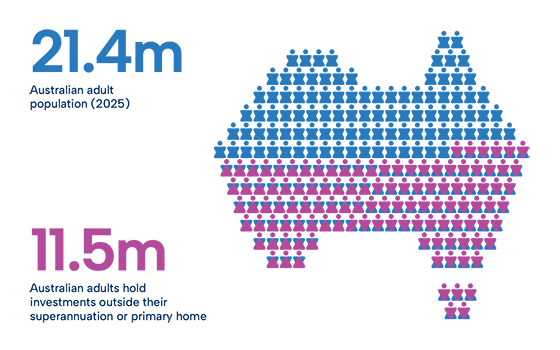
The 2026 Australian Investor Study (the Study) confirms the continued growth in investors in Australia. Much more than a snapshot of current investing trends, it provides a window into the financial lives of everyday Australians and offers a unique perspective on our ‘nation of investors’. An estimated 11.5 million Australians now invest beyond their superannuation and primary home, up from 10.2 million in 2023, and an overall increase of 2.5 million since 2020.
How Australians invest is changing – top nine findings

In 2026, we continue to see more Australians beginning their investing journey. The Study uncovers several trends. Self-managed superannuation funds continue to grow in popularity. Exchange-traded funds are rivalling shares as the first investment choice for younger investors. And for the first time, we examine in detail how investors are using AI tools to source information and investment advice.

Navigate through the tabs below to dive into the top nine findings in this year’s study.

01Market participation is at a record high
The number of Australians participating in investment activities outside their superannuation and primary home has risen to 11.5 million in 2026. Since 2020, the number of investors has increased by an estimated 2.5 million.
Australian adult investment population infographic 2025
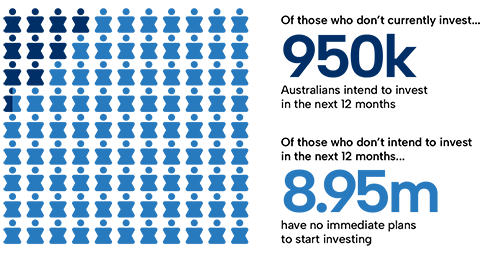
02Nearly a million Australians intend to start investing within 12 months
Overall, about a quarter of the 9.9 million Australians who don’t currently invest (including intending investors) have a clear intention to invest at some point in the future.
Infographic on Australian investment intentions statistics
03Young women are leading growth in intending investors
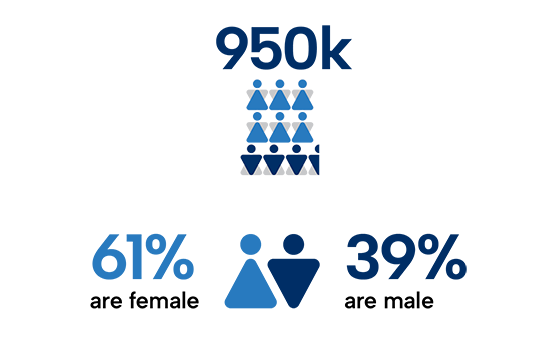
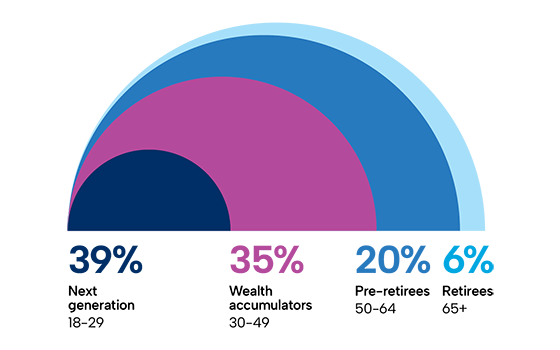
Of all intending investors, 61% are women and 39% are men. By age, next generation investors (aged 18–29) account for almost four in 10 people who intend to start or resume investing within 12 months.

All intending investors

Gender distribution infographic with population figure
Demographic segments by age and percentage chart
04Female participation is rising among on-exchange investors
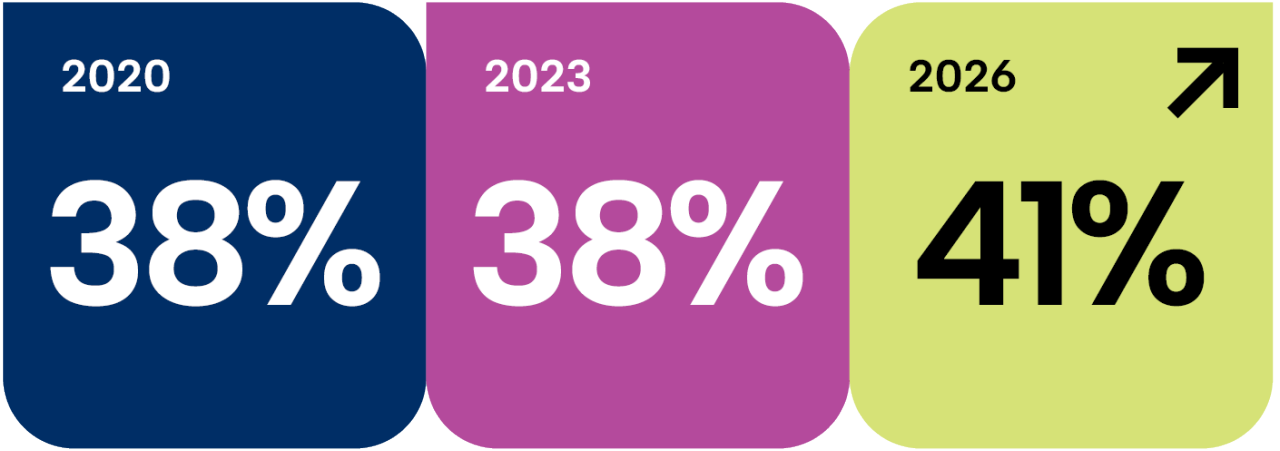
Women account for 41% of on-exchange investors, up from 38% in 2023. This equates to about 3.4 million women in Australia who own shares, ETFs or other listed assets.
Colorful percentage growth comparison infographic
05Exchange-traded funds (ETFs) are rivalling shares as a first-ever investment
The same proportion of next generation investors made their first-ever investment in ETFs (22%) as in residential investment property (22%). Australian-listed shares remain the leading first-ever investment for this cohort (26%), but ETFs are a close second.
06AI tools are reshaping the investment landscape
Next generation investors report using AI tools (24%) for investment advice more often than financial planners and advisers (19%).
07Interest in self-managed superannuation funds (SMSFs) is surging
Annual SMSF establishments reached a record high in 2025, while interest in starting an SMSF has almost doubled since 2023. One in five non-SMSF investors say they are considering starting an SMSF within 12 months.
08Demand for financial advice is strengthening
Just over a third of all investors expect to seek financial advice in the next 12 months, led by next generation investors. Just over half of all investors say they intend to seek financial advice at some point in the future.
09Millions of Australians own cryptocurrencies
An estimated 2.79 million investors currently hold, or have traded, cryptocurrency in the past 12 months. Alongside ETFs, cryptocurrency has become one of the most commonly held investment products after Australian-listed shares and term deposits.
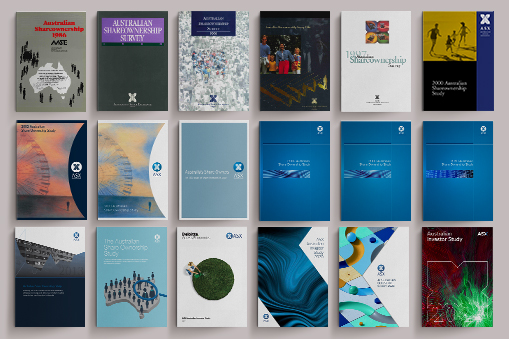
Collection of all covers of the ASX Australian Investor Study

40 years of the ASX Australian Investor Study

What started as a measure of retail share participation has evolved into something much bigger. In 2026, the ASX Australian Investor Study series marks its 40th anniversary. 

Since 1986, ASX has produced 18 reports in this series, capturing the views of approximately 100,000 investors. During that time, ASX has tracked retail share participation and surveyed the characteristics, attitudes and behaviours of investors. 

The evolution of retail investing in Australia

The ASX Australian Investor Study series has documented the democratisation of retail investing in Australia and its growing sophistication over the years.

Navigate through the tabs below to explore the seven key themes identified across four decades of survey data. Use the slider to see how retail investing has changed throughout time.

01The democratisation of share investing
Federal and State government privatisations and demutualisations in the 1990s and 2000s led to millions of Australians owning shares for the first time. Share investing went mainstream, no longer the preserve of older, wealthier investors.
02Technology changes the investing landscape
ASX technology introduced in the late 1980s began to digitise share investing. Online broking’s emergence in the late 1990s and 2000s reduced investment barriers, making share investing easier, cheaper and faster. The internet, social media, smartphones and apps further enabled retail investing.
03A nation learns to invest
With millions of Australian owning shares for the first time, demand for sharemarket information and knowledge grew. In the 2000s, newspapers expanded their sharemarket coverage, investment magazines and sharemarket newsletters were launched, and ASX broadened its investor education services.
04The self-directed investor emerges
As more people owned shares, used online brokers and built their sharemarket knowledge, they became more confident about investing. Self-Managed Superannuation Funds (SMSF) grew faster, and investors sought greater control of their wealth through self-directed investing rather than using financial advisers or outsourcing investment decisions through unlisted managed funds.
05The ETF revolution
In the 2010s and 2020s, the trend towards self-directed investing fuelled rapid growth in the ASX exchange-traded fund (ETF) market. Hundreds of ETFs listed on ASX, providing new ways for Australian investors to gain exposure to local and global assets.
06The changing face of investing
In the 2020s, next-generation investors (aged 18-29) became the highest proportion of intending investors. For the first time, significantly more women than men in 2026 planned to invest in the next 12 months. Younger investors showed greater interest in owning international shares, cryptocurrencies and ETFs.
07Rise of the portfolio investor
In the 2020s, retail investors, now more knowledgeable about the sharemarket, increasingly held ASX-listed assets across markets, trading more often. There was greater focus on portfolio construction and diversification.

Additional details