
A much larger ETF market in Australia over the next 10 years, many more ETFs to choose from, and greater use of AI in portfolio construction and ETF selection … these are just some of the trends that ETF issuers predict.
The evidence to date – reflected in growth in ETF funds under management and listings over the past 25 years [1] – shows the Australian ETF market has significant growth momentum.
It’s important to note that in this article, ETF issuers are discussing the outlook for the ASX ETF market rather than individual ETFs. Although they expect continued growth in funds under management in ETFs, that doesn’t mean an ETF’s price will rise or fall. An index-tracking ETF’s total return is determined by the performance of the index it tracks, not by funds under management in an ETF.
Readers should view this article as a series of industry comments on the ETF market. Other ETF articles in this special edition of ASX Investor Update provide investor education on ETFs, including their risks.
Here are the ETF issuers’ opinions:
1. Alex Vynokur
CEO and founder, Betashares
Insight: ETFs could be used more as a retirement tool
Over the next five to 10 years, I expect ETFs to become an even more central part of how Australians build and manage wealth. The industry has grown from a niche segment to more than A$360 billion [2], yet ETFs still represent a relatively small share of how Australians invest, highlighting a significant potential runway for growth.
The next phase may be defined not just by scale, but breadth. In Betashares’ opinion, ETFs may continue to be used across a broad range of asset classes including equities, fixed income, cash, commodities and alternatives.
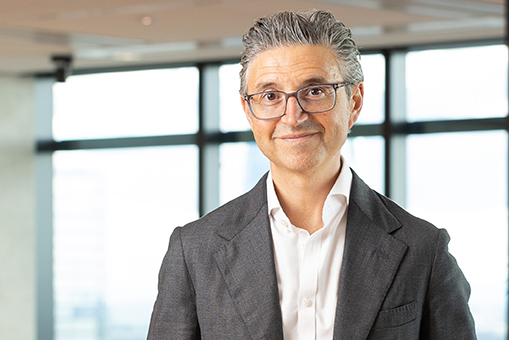
Alex Vynokur, Betashares
And while ETFs are often associated with younger Australians building wealth, Betashares expects them to play an increasingly important role in helping Australians generate income and manage their investments through retirement.
Education will be just as important as innovation. Greater choice needs to be accompanied by the knowledge and confidence to make informed decisions and build robust portfolios for the long term.
In Betashares’ opinion, a key risk is that, as the number of ETFs grow, parts of the industry may lose sight of what made ETFs successful in the first place – providing simple, convenient and liquid access to high-quality investment opportunities.
ETFs may continue to be used across a broad range of asset classes including equities, fixed income, cash, commodities and alternatives.
2. Daniel Shrimski
Managing Director Asia Pacific, Vanguard
Insight: More Australians could build their portfolio entirely through ETFs
The Australian ETF market has grown rapidly over the past 25 years, but Vanguard believes the next decade could be even more significant as ETFs become a mainstream foundation for how we invest.
Today, many investors and advisers use ETFs to gain exposure to a particular market or investment theme. Looking ahead, Vanguard expects more Australians may choose to incorporate ETFs into broader portfolio strategies, whether that's through broad market exposure, diversified all-in-one portfolios, fixed income solutions or income-focused strategies.
We also expect continued innovation across the industry. As investor needs evolve, more investment strategies are likely to be delivered through ETF structures, driven by demand for transparency, accessibility, flexibility and low costs.
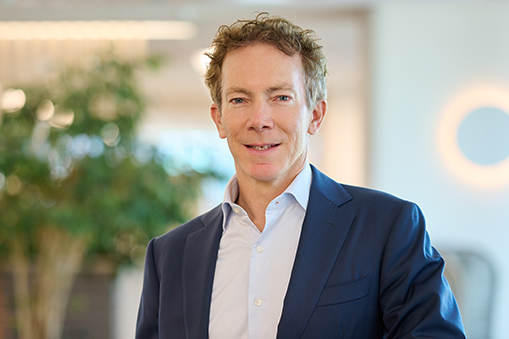
Daniel Shrimski, Vanguard
Importantly, growth is being supported by a new generation of investors. Vanguard is seeing strong engagement from younger Australians who are increasingly turning to ETFs as a simple and accessible way to begin investing and pursue their long-term financial goals.
As the ETF market grows, investors could have more choice than ever before. That's a positive development, but it's important to remember that not all ETFs are the same. Some provide broad, diversified exposure to markets, while others offer highly targeted exposure to specific sectors, themes or investment trends.
While it can be tempting to invest in the latest trend, what is popular today may not deliver strong results tomorrow. We believe investors should be cautious about concentrating too heavily in any one theme or sector simply because it is performing strongly today.
As we remind all investors, ETFs as investments involve risks, including the potential loss of capital and periods of negative returns.
3. Gareth Hughes
Head of Wealth, BlackRock Australia
Insight: ETFs could become a mainstream investment tool
Over the next five to 10 years, BlackRock expects ETFs to become an even more important part of how Australians build and manage wealth. ETFs are being used in a wider range of portfolio approaches, including those focused on growth, income, risk management and retirement planning.
Technology will also play a more important role. Easier-to-use investment platforms, AI-powered portfolio tools and more personalised insights are helping investors make more informed decisions.
At the same time, advances in digital and scaled financial advice models have the potential to give more Australians access to guidance that was once out of reach, while educational content and investor resources continue to improve confidence and understanding.
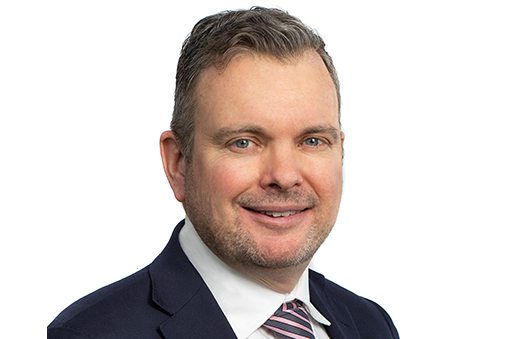
Gareth Hughes, BlackRock Australia
The opportunity for growth remains significant. BlackRock’s iShares ETF Insights research found that only 16% of Australian adults currently own ETFs, despite strong interest in investing and building long-term wealth.
While BlackRock still sees core ETFs as important building blocks, around that core we're likely to see continued growth in areas such as active ETFs - which have attracted increasing investor interest in recent years, given the volatility we’re seeing in equity markets and the increasing gap between winning and losing stocks.
We also see an important role for ETFs in providing access to less correlated asset classes that can help investors build more resilient portfolios against market shocks, including fixed income, infrastructure and alternative exposures.
While the outlook is positive, one potential risk is that greater choice creates greater complexity. As the market evolves, investor education will remain critical to helping Australians understand what they own, stay focused on their long-term objectives and make informed investment decisions.
4. Alex Zaika
CEO, Global X ETFs
Insight: ETF assets could surpass A$1 trillion
In Global X’s opinion, Australia’s ETF market is still in the early stages of what will be a much bigger shift in how people invest. Five years from now, Global X expects ETFs to be the default vehicle for all new investments in Australia, across portfolios, from core allocations through to more targeted or specialist exposures.
Global X wouldn’t be surprised to see the Australian ETF market pass A$1 trillion in assets within five years (from A$360 billion in July 2026 [3]) with the vast majority of investment managers opting to launch ETFs instead of unlisted funds, whether they are active (where a manager selects investments) or passive (aims to track an index or market).
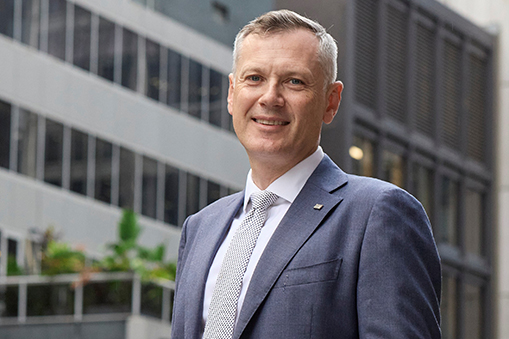
Alex Zaika, Global X ETFs
The ETF market itself could become much broader. We could see more targeted strategies including alternative income, the use of sensible leverage and access to asset classes that have traditionally been difficult for Australian investors to reach. The technology underpinning ETFs will also continue to evolve, potentially making them available to investors around the clock.
There are some powerful forces behind this growth. ETFs are simple, transparent, and generally low cost, which makes them particularly well suited to a market where financial literacy and knowledge of investing remain relatively low.
Australia also has a significant intergenerational wealth transfer ahead of it. Many younger Australians are already comfortable with ETFs, and Global X expects a larger portion of inherited wealth to be invested via ETFs.
Global X believes ETF growth needs to be accompanied by discipline. New entrants will inevitably push into more complex and concentrated products. The ETF structure itself is robust, but one of the bigger risks are poor governance. Strong regulation and scrutiny of issuers will be essential to maintaining investor confidence as the market matures.
5. Arian Neiron
CEO and Managing Director - Asia Pacific, VanEck
Insight: There could be over 1,000 ETFs on ASX within 10 years
The next five to 10 years will not be defined only by more ETFs, but by smarter ETFs traded on what could be a fundamentally different exchange.
On scale, I expect the ASX ETF market to exceed A$1 trillion in funds under management, with more than 1,000 ETFs trading (from 457 in July 2026 [4]) and total ETF traded value comparable to, or plausibly greater than, total ASX cash equities turnover.
Consider market structure, because that is where the regime shift happens. ETF settlement could compress from T+1 (a trade is settled one day after it is made) to T+0 and ultimately to instant.
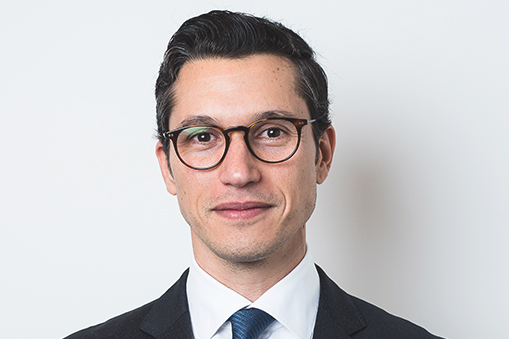
Arian Neiron, VanEck
Once settlement is instant, the trading day loses its meaning. VanEck expects a 23-hour, always-on market, with AI agents progressively displacing human market makers on both sides of the ETF price spread.
Tokenisation (where assets are represented as digital tokens on a blockchain or similar distributed-ledger system) is the enabler. Spreads on international exposures should tighten as 23-hour continuous trading closes the pricing gaps that currently exist while Australia is open for business.
In VanEck’s opinion, the ASX could become a marketplace for everything, equities, bonds, credit, commodities, real estate, private assets - all wrapped, priced and traded continuously, with the exchange-traded product as the default access.
In VanEck’s view, one ETF risk warrants respect: proliferation. That is, too many issuers chasing the same market could potentially mean a long tail of ETFs that never reach viable scale. VanEck expects more ETF de-listings and consolidation among sub-scale managers. Market consolidation may favour products that achieve sufficient investor demand and scale.
From ASX
The ASX Investment Products monthly report tracks the growth of the ASX ETF market.
--------------------------------------
[1] There was one ETF on ASX in 2001. As at 31 July 2026, there were 457. Source: ASX Investment Products Monthly Report, July 2026.
[2] ASX Investment Products Monthly Report, 31 July 2026, p.1.
[3] ASX Investment Products monthly report, 31 July 2026, p.1.
[4] ASX Investment Products monthly report, 31 July 2026, p.1.
DISCLAIMER
Information provided is for educational purposes and does not constitute financial product advice. You should obtain independent advice from an Australian financial services licensee before making any financial decisions. Although ASX Limited ABN 98 008 624 691 and its related bodies corporate (“ASX”) has made every effort to ensure the accuracy of the information as at the date of publication, ASX does not give any warranty or representation as to the accuracy, reliability or completeness of the information. To the extent permitted by law, ASX and its employees, officers and contractors shall not be liable for any loss or damage arising in any way (including by way of negligence) from or in connection with any information provided or omitted or from any one acting or refraining to act in reliance on this information.
© Copyright ASX Operations Pty Limited ABN 42 004 523 782. All rights reserved 2026.
More Investor Update articles
Don’t miss the latest insights from ASX Investor Update on LinkedIn
The views, opinions or recommendations of the author in this article are solely those of the author and do not in any way reflect the views, opinions, recommendations, of ASX Limited ABN 98 008 624 691 and its related bodies corporate (“ASX”). ASX makes no representation or warranty with respect to the accuracy, completeness or currency of the content. The content is for educational purposes only and does not constitute financial advice. Independent advice should be obtained from an Australian financial services licensee before making investment decisions. To the extent permitted by law, ASX excludes all liability for any loss or damage arising in any way due to or in connection with the publication of this article, including by way of negligence.