Funding future tech: NEXTDC at the nexus - Part 1
- Wed 24 June 2026
- 6 MIN READ
This is the first of a two-part interview with NEXTDC (ASX:NXT) CEO, Craig Scroggie. The home-grown data centre business is at the forefront of the AI revolution, which requires substantial market support. Helping investors understand the opportunity and the road ahead is a challenge. Here, Scroggie explores the company’s roots and how it manages shareholder expectations.

NEXTDC has grown from a single data centre in Brisbane to a pan-Asian hyperscale infrastructure platform. What does the next chapter of that growth story look like and where are the most compelling opportunities?
Data centres already run the country: everything from online banking, cloud, hospitals, air services, energy systems, defence and emergency services. Every mission-critical industry continues to move its compute off premise and into purpose-built, secure facilities. That role keeps growing. But now, industrial-scale AI factories are being layered on top, the unit economics for which are unlike anything the industry has seen.
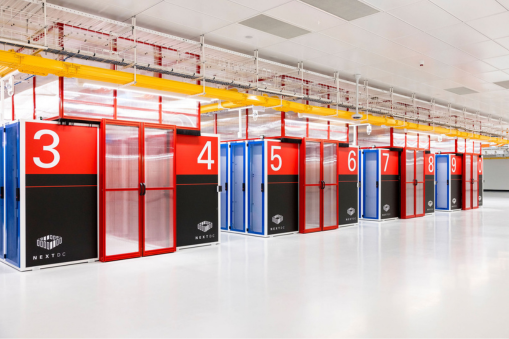
NEXTDC is positioned to be a primary operator of that infrastructure across Australia and Asia. S4 at Eastern Creek represents A$8 billion of new infrastructure investment over the next few years, with hundreds of megawatts of new capacity sold to customers currently under development, the largest backlog in our history.
How do you manage investor expectations through long construction and pre-revenue phases, particularly when capital is deployed ahead of returns?
Investors who have been with us through numerous capital cycles over the 15 years understand the model. We build metropolitan data centre capacity phased to meet demand, because enterprise and government customers do not buy capacity that has not been built. Hyperscale and AI customers’ needs are unique, and we build and engineer to suit the customer’s technology. They commit to capacity, then it is constructed.
The last 12 months tell the story. We have raised A$1.5 billion in equity and A$1.8 billion in new senior debt facilities, with A$8.2 billion of total senior debt available and A$8.4 billion of pro forma liquidity. Every dollar has been sized to projects with identified customer demand.
Pre-revenue is not a phase to manage through. It is the moment when capacity defines the next decade of cash flow. Investors are always interested in operating cash flow growth. They are most interested in whether the platform we build can absorb a generational demand cycle. It can.
NEXTDC has tapped equity and debt markets. How do you think about your relationship with capital markets and what does a well-managed balance sheet look like?
Years of preparation go into securing the right long-term development sites so the balance sheet is built for opportunity. Capital markets have been our partner for 15 years, including public equity, public debt, private debt and bilateral facilities, and each plays a role in capital formation and balance sheet structuring.
The discipline that matters is matching capital duration to infrastructure duration. Digital infrastructure is long-duration capital for multi-decade assets at the centre of critical national infrastructure. What matters is long-duration debt and equity sized to genuine growth, not financial engineering.
"Capital markets have been our partner for 15 years, including public equity, public debt, private debt and bilateral facilities and each plays a role in capital formation and balance sheet structuring."
With billions in committed capex across your pipeline, how do you stress-test those investment decisions against shifting interest rate environments, construction cost inflation and evolving customer demand signals?
The Australian data centre sector is forecasting A$26 billion of capacity expansion by 2030, with a further A$7.2 billion of grid investment funded directly by operators. National capacity is projected to more than double from 1,350 megawatts in 2024 to 3,100 megawatts by 2030. The build is matched to demand already secured.
Our operational track record across nine cities and 18 facilities is our stress test. Every decision is tested across rate environments, construction cost inflation, energy pricing and customer demand sensitivity. We model it and sensitise it, as we have for 15 years.
The economics underneath AI infrastructure are materially different from traditional enterprise deployments. Multi-billion-dollar system costs, long-duration customer commitments and recurring infrastructure revenue profiles are reshaping how hyperscalers and infrastructure operators allocate capital globally.
AI workloads, sovereign compute and enterprise digitisation are structural reallocations of economic activity. They will be the dominant industrial story of the next decade, regardless of where rates settle. Construction cost inflation is real, however, managed through achieving scale and long-term contractor relationships, supported by standardised modular design that compresses the build cycle from years to quarters.
Are there circumstances under which NEXTDC would consider asset monetisation, for example a REIT structure or partial sell-down, or is ownership of the full stack central to the strategy?

We continuously evaluate the optimal capital structure. That is what disciplined capital allocators do.
Integrated ownership of site, power, connectivity and operations is core to how we serve hyperscale and AI customers. They want a single counterparty accountable for the full stack. That is the differentiator at the top end of the market. We do see value in diluting it.
A REIT or partial sell-down is a financial instrument. Not a strategy. If a specific asset or portfolio could be better served by a different ownership model in the future, we will evaluate it on merit. The most important priority is to build the platform. The market rewards operators who execute. We keep executing. Capital recycling is simply a financial optimisation function.
The data centre sector is increasingly being drawn into conversations about industrial energy policy, capacity markets and demand response. Do you see NEXTDC playing a role in shaping Australia’s energy future?
Energy is now one of the binding constraints on every digital economy in the world. Power availability has become the defining constraints on hyperscale and AI deployment globally. Data centres in Australia consume around two per cent of national electricity, which is 3.9 terawatt hours. By 2030, that rises to roughly 6%. In Ireland, it is already above 20%. In parts of the US, single counties run more data centre load than entire countries. We are an order of magnitude behind that scale.
The industry pays its own way. Australian operators have invested A$3.1 billion in grid infrastructure since 2020 under the National Electricity Rules. A further A$7.2 billion is committed to 2030. The Australian Energy Regulator’s Victorian distribution determinations for 2026 to 2031 indicate that additional industrial load, including data centres, can help dilute fixed network costs and reduce some household network charge components. Household energy pressure comes from coal retirement, gas market volatility and the cost of transitioning the grid. Not from data centres.
What data centres actually do to demand is misunderstood. They do not create the underlying compute demand. They aggregate it into more efficient, purpose-built infrastructure. If the workloads sitting in data centres today were still run in the office buildings computer rooms they replaced, researchers estimate national electricity consumption would be materially higher. Data centres are substantially more energy efficient than the alternative. Aggregating compute into purpose-built facilities is one of the most material energy-productivity interventions in the industrial economy.
The renewable build-out is being underwritten by data centre demand. Long-dated power purchase agreements have brought 1.5 terawatt hours of new renewable generation into the grid. Enough to power 200,000 homes. PPAs underwrite the project finance solar, wind and battery developers need. Australian data centres now offset around 70% of their energy consumption through renewables. Industrial off-take from this sector is accelerating the build-out, not crowding it out.
"If the workloads sitting in data centres today were still run in the office buildings computer rooms they replaced, researchers estimate national electricity consumption would be materially higher."
The transition takes time. Coal and gas are firm baseload today. They are firm baseload tomorrow. Pretending otherwise costs us reliability and competitiveness. A fully renewable industrial grid takes a decade or more. In the meantime, we need every source operating.
Australia is one of the few advanced economies that has ruled nuclear out by federal and state moratorium. That is not a technical decision. It is an ideological one. Australia holds more than 7% of the world’s uranium. We produce world-class nuclear medical isotopes at Lucas Heights. The government is comfortable supporting floating nuclear reactors in the form of AUKUS submarines and the workforce that operates them. The capability exists. The resources exist. The skills exist.
Small modular reactor technology from companies like TerraPower, backed by Bill Gates and now Nvidia, is one example of the kind of potentially clean, firm generation increasingly being evaluated globally for AI-era industrial grids. The Australian government should let the free market evaluate the technology. All scientific solutions should be considered. I am not saying nuclear is the only solution. I am saying in the few decades ahead we need cheap, firm and reliable baseload power, and every viable source needs to be on the table.
NEXTDC is a constructive, direct voice in the national energy conversation. The industry builds new generation through PPA, transmission and distribution capacity to support the needs of our industry and all communities benefit from those investments. Power purchase agreements anchor new renewable capacity directly. Potentially on-site generation and behind-the-meter arrangements where they accelerate delivery in regional areas could support future growth. Our sector sits at the intersection of technology, energy, productivity and national resilience.
About the author
Disclaimer
Independent advice from an Australian financial services licensee is needed before making financial decisions. This is not intended to be financial product advice. To the extent permitted by law, ASX Limited ABN 98 008 624 691 and its related bodies corporate excludes all liability for any loss or damage arising in any way including by way of negligence.
© Copyright ASX Operations Pty Limited ABN 42 004 523 782. All rights reserved 2026.