
Molly Benjamin recalls getting a hot tip about an emerging biotech company from a relative at a family gathering. “They told me this biotech was the next big thing, so I bought it, even though I didn’t understand the company,” she says.
After the biotech’s share price initially rose, Benjamin bought more, believing she was onto a big winner. Then the biotech’s price tanked, crushing Benjamin’s investment in it.
“I asked the family member who tipped the stock what went wrong,” says Benjamin. “They told me that they sold the stock after its price took off. Unfortunately, they only told me to buy, not when to sell!”.
Many investors turn to family and friends for investment ideas. Almost a third of all investors said family and friends were their top information source when making investments, according to the latest ASX Australian Investor Study [1].
Women relied on family and friends for ideas more than men, and even pre-retiree and retirees, who would be expected to have more investment experience on average, nominated family and friends as their top information source, the study found.
Of course, there’s nothing wrong with asking people you know and trust about the sharemarket at the start of your investment journey. For some investors, family and friends might have been the source of excellent investment ideas.
But how well does the family member or friend understand the investment and why are they recommending it? Do they own it and will you know when to sell? Are you investing based on sound research or speculating on a hot tip?
Potential dangers of hot tips
Looking back, Benjamin learned valuable lessons from her biotech experience. “First, if the investment sounds too good to be true, it almost certainly is. Second, you need to think about where the idea comes from and why.”
Benjamin, founder of the Ladies Finance Club, podcaster and author of Girls Just Want to Have Funds, a popular personal finance book, says that these days her investment profile focuses more on Exchange Traded Funds (ETFs) over broad-based sharemarket indices rather than individual stocks.

Molly Benjamin, founder of the Ladies Finance Club
ETFs are ASX-listed products that provide exposure to a variety of securities in a single trade. Bought and sold like a share, an ETF over the S&P/ASX 200 Index for example, provides exposure to 200 companies in that index, aiding portfolio diversification. Some ETFs are structured with lower fees than certain actively managed funds, although costs and suitability can vary between products.
The main risk with ETFs is market risk. If the Australian sharemarket falls, an ETF that aims to track the S&P/ASX 200 Index will generally move in line with that index, although actual outcomes can differ. Investing in Exchange Traded Products on the ASX website explains the key features, benefits and risks of ETFs.
“I’ve seen too many people over the years start investing because they want to make quick money,” says Benjamin. “They hear stories of how other investors have big wins and they want the same. Too often, they end up losing all their money and they stop investing, which further damages their long-term wealth creation.”
Benjamin’s best investment – exposure to technology companies in the NASDAQ Composite Index in the United States – benefited from a long-term approach. “I thought the big US tech companies had good long-term prospects and used an ETF that provided exposure to those companies on the NASDAQ exchange. I’ve held that ETF for years.”
Tech stocks can be volatile. If the NASDAQ index fell, an ASX-listed ETF that tracks that index would also be expected to fall. “I invested in tech for the long term, so can cope with any short-term falls,” says Benjamin.
Getting the structure right
Morningstar’s Shani Jayamanne says her worst investment was one particular ETF in the US.
This ETF, which targets companies exposed to long-term structural technology shifts, soared in 2021. For a time, this ETF was one of the world’s star ETFs and was lauded in investment circles.
“When I bought this ETF in 2020, its performance was beating the pants off every other ETF in its class,” says Jayamanne. “The ETF was investing in ‘disruptive technologies’, which sounded exciting to me but was vague and had no connection to my portfolio goals.

Shani Jayamanne, Investment Specialist at Morningstar
From its peak one year later, the ETF fell sharply. Jayamanne sold out of the ETF, losing 40% of her initial investment. “It was an expensive lesson. In hindsight, there was no reason for me to tilt my portfolio towards innovative companies. My big lesson was the importance of connecting your individual investments to your long-term financial goals.”
She says her 40% loss was much larger than its looks. “Imagine if I’d put the capital I lost into the market and left if there for years to compound.
Jayamanne, a Director and Investment Specialist at Morningstar, and co-author of the new personal finance book Invest Your Way, believes new investors get bad information on risk-taking and capital preservation. “Too often, we’re told that when we’re young we can take more risks because we have more time to recover. A significant capital loss at the start of your investment journey can have a huge effect on your long-term wealth creation when you consider the power of compounding returns.”
This thinking has informed what Jayamanne considers her best investment – her superannuation. “Beginner investors often think choosing one’s investments is the be all and end all,” she says. “I think how you hold an investment is more important in the long run; that is, choosing the most effective structure to achieve your long-term goals.”
For Jayamanne, that is superannuation. “Every investor is different, but I invest my super through ETFs that track broad-based sharemarket indices.”
“Superannuation is forced discipline – my contributions go in rain, hail or shine. For my circumstances and investment goals, it is a tax-effective vehicle, and have sought out low-fee products. Depending on individual circumstances and market conditions these factors can make a big difference to returns over time. Each time I’ve had a pay rise, I’ve put more money into my super, within the super rules. My super is on track to be my best investment over time.”
Jayamanne says beginners should not 'beat themselves up' over a bad investment decision. “All investors make mistakes,” she says, “You are never going to get every decision right. That’s why you need to think about diversification and capital preservation early on, so you minimise any losses.”
Planning for inevitable market corrections is also important, says Jayamanne. “Like a lot of younger people, I have never experienced a bear market. Throughout my entire career, the Australian sharemarket has, on average, gone up each year. That can create a false sense of security for people who have only known good markets. Occasional bad years for the market are inevitable.”
Beware market noise and hype
Stockspot CEO Chris Brycki says his worst investment was chasing an online advertising stock during the internet boom in the late 1990s.
“Any company with an online angle was surging and I was convinced I was seeing the future unfold in front of me,” says Brycki. “I owned several speculative shares that rebranded themselves as online companies. When the tech bubble burst in April 2000, reality arrived fast. Share prices collapsed overnight.”
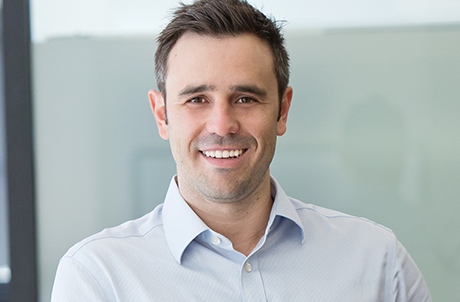
Chris Brycki, Stockspot CEO
Brycki’s online adverting stock fell from $3 to 0.3 cents within a year. “I strongly believed in the power of online advertising – a belief that turned out to be correct. But my timing was terrible. The mistake was chasing a hot sector at the peak of hype. When prices started falling, I didn’t have the patience or diversification to ride it out. The investors who made the real money from internet stocks were the ones who bought after the bubble burst when investor sentiment was bleak.”
Brycki’s big learning was the danger of investing in hot sectors that the market and media love. “Markets move in cycles. Sectors run hot and then cool off. The most dangerous time to invest can sometimes be when something feels obvious and everyone is talking about it. Rather than chasing hype or trying to pick the next big winner, long-term success in my opinion comes from diversification, discipline and the ability to do the opposite of the crowd.”
Brycki says his best investment was understanding the power of automating his investing and stepping back from day-to-day investment decisions. “By using a disciplined, rules-based approach with automatic portfolio rebalancing, I no longer spend time worrying about markets or reacting to headlines.
“My investment portfolio (and super) is adjusted when needed, without emotion. That has freed up something far more valuable than returns - it has given me more time with my family, less stress and the confidence that my investments are working quietly in the background while I focus on the things that matter most.”
-----------------------------
[1] ASX Investor Study 2023. 31% of all investors said family and friend was their top information source for new investments. P.38.
DISCLAIMER
Information provided is for educational purposes and does not constitute financial product advice. You should obtain independent advice from an Australian financial services licensee before making any financial decisions. Although ASX Limited ABN 98 008 624 691 and its related bodies corporate (“ASX”) has made every effort to ensure the accuracy of the information as at the date of publication, ASX does not give any warranty or representation as to the accuracy, reliability or completeness of the information. To the extent permitted by law, ASX and its employees, officers and contractors shall not be liable for any loss or damage arising in any way (including by way of negligence) from or in connection with any information provided or omitted or from any one acting or refraining to act in reliance on this information.
© Copyright ASX Operations Pty Limited ABN 42 004 523 782. All rights reserved 2026.
More Investor Update articles
Don’t miss the latest insights from ASX Investor Update on LinkedIn
The views, opinions or recommendations of the author in this article are solely those of the author and do not in any way reflect the views, opinions, recommendations, of ASX Limited ABN 98 008 624 691 and its related bodies corporate (“ASX”). ASX makes no representation or warranty with respect to the accuracy, completeness or currency of the content. The content is for educational purposes only and does not constitute financial advice. Independent advice should be obtained from an Australian financial services licensee before making investment decisions. To the extent permitted by law, ASX excludes all liability for any loss or damage arising in any way due to or in connection with the publication of this article, including by way of negligence.