
Like many young people starting their investing journey, Ariane [1] felt a little daunted about what to buy. The 25-year-old from Sydney says she was ‘overwhelmed’ by all the financial information and advice available online.
"I don’t have a financial adviser and I’m not an economic expert," Ariane told ASX Investor Update. "It’s a pretty big barrier to entry when you are investing for the first time. You don’t know what to invest in or which information to trust.”
Ariane asked friends for advice – a strategy favoured by many investors. ‘Family and friends’ was the top investment source for next-generation investors (aged 18-24) in the ASX Australian Investor Study (AIS) 2023.
Arianne wanted to invest a modest amount of her pay each month and build an investment over several decades. Also, she didn’t feel comfortable picking individual companies or deciding when to buy or sell them.
“My friends gave me two good pieces of advice,” she says. "The first was only to invest an amount I am comfortable with and won’t need to touch for rainy-day expenses. The second was to consider exchange-traded funds (ETFs).”
ETFs invest in, or provide exposure to, a variety of securities. For example, an ETF that aims to track the S&P/ASX 200 index provides exposure to all companies in that index through a single ASX-quoted fund. Like all investments, ETFs have potential benefits and risks.
After careful consideration, Ariane in May 2026 invested in a diversified fund that holds several ETFs through Stockspot, an online investment adviser. She now automatically allocates part of her pay to that fund each month.
"For me, an ETF feels more diversified and easier than having rely on my own judgement, bet on an individual company, and have to log on daily to look at its price and manage it,” says Ariane. “I like set-and-forget investing and letting my investment build up over time.”
Ariane is happy with her investment so far. “I told my younger sister that it’s pretty easy to get started and your money works harder compared to sitting in an online savings account. I’ll stick with ETFs for now and might change my portfolio’s composition as I learn more about investing.”
Growth in next-gen investors
Ariane is part of an important trend on ASX this decade: the growth in next-generation investors. About 9% of all Australians who hold investments outside their superannuation and family home are now aged between 18 and 24, according to the AIS 2023.
In 2023, almost a third (29%) of Australia’s 1.33 million intending investors who planned to invest in the next 12 months were next-gen investors, found AIS 2023.
With many more next-gen investors expect to buy ASX-listed securities for the first time this decade, ASX Investor Update asked experts for their best suggestions for young, first-time investors. Here are their responses:
1. Vihari Ross
Portfolio Manager, Antipodes
Key takeaway: Invest as soon as you can.
Looking back, the best advice I would give my 20-something self is to start early. Time is on your side. Investing early can potentially build a strong foundation that gives you more options throughout your life. The goal is to benefit from the return on your investments compounding over years or decades. As Warren Buffett once said, "you want to find a way to make money while you sleep". The compounding of returns may do that over time.
That said, time in the market is no guarantee of investment success. If you buy at the wrong time, when companies and markets are overvalued, you can have poor returns for years. Be cautious, avoid overhyped investments and consider investing in assets that are better value, or use a fund manager who can do that for you. Be open-minded. Investing in your twenties is a great way to build your investment knowledge for the rest of your life.

Vihari Ross, Antipodes
2. Hugh Dive
Chief Investment Officer, Atlas Funds Management
Key takeaway: Minimise losses and learn from any mistakes.
One lesson I learned was the importance of managing losses in my own portfolio. Even the best investors struggle to get 60% of their ideas correct. In other professions, if you only got 60% of things right, you’d be out of a job. But with investing, losses are an inevitable part of the journey.
20-something investors, in particular, should learn how to cut their losses early if the investment case has changed. This can be hard and the temptation when you have made a mistake is to hold on until the share price recovers to where you bought it. But the stock market does not know (nor care about) your entry price. The key is to admit you made a mistake, prevent a small loss from becoming a bigger one and learn from it to become a better investor.

Hugh Dive, Atlas Funds Management
My other advice is to be humble. In your twenties, it’s easy to confuse skill with luck. If you pull off a few early winners, you can become overconfident and make bad decisions. Despite the marketing hype, investing is not an exciting 'sport' to play on your smartphone, but a game of inches over many years. You don’t need to take wild risks to build long-term wealth. In my experience, I focussed on companies I believed had stronger fundamentals at the time and paid extra attention to a company’s cash flow and whether it’s growing.
3. Effie Zahos
9News Money Editor, InvestSMART Non-Executive Director and Ecstra Director
Key takeaway: Know which spending genuinely adds to your life.
If I could sit down with my 20-something self, I’d tell her this: stop trying to look wealthy and start steadily becoming wealthy. In your twenties, it is easy to spend money proving you are doing well. The new outfits, dinners, holidays, cars and little upgrades all feel harmless at the time. Some of them are. Life is for living. But I wish I had really understood earlier that every dollar has a job. It can either impress someone for five minutes, or it can go to work for you for decades.
The real magic of investing in your twenties is time. You don’t need to be rich to start. You just need to start. Even small amounts invested regularly can become powerful because compounding does the heavy lifting. The money you don’t spend trying to look successful can become the money that gives you choices later. Financial freedom is not about never enjoying yourself. It is about knowing which spending genuinely adds to your life.
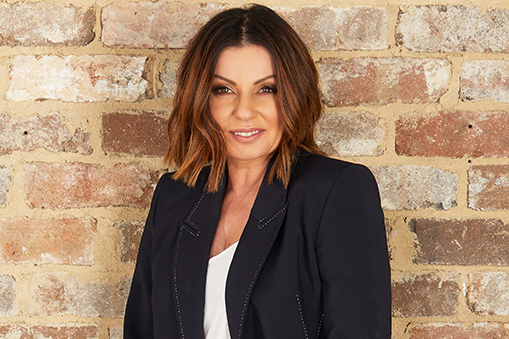
Effie Zahos, InvestSMART
Today, technology makes it easier than ever to pay yourself first and invest automatically. The earlier you give your money a plan, the less pressure you put on your future self to catch up.
4. Rachel Waterhouse
CEO, Australian Shareholders’ Association (ASA)
Key takeaway: Consider long-term investing and the power of compounding.
Be consistent and disciplined in your investment approach. When I first invested in my twenties, I sold investments too quickly on several occasions. I did not fully understand the benefits of long-term investing, staying in the market and allowing returns to compound over time. If I had my time again, I would have held good investments for longer, or at least re-invested the proceeds into other assets rather than stepping away from the market. Looking back, I did not have a clear investment strategy. At times, I bought and sold based more on gut feel than a disciplined plan or research.
My other advice is to think about your future investing self. Over the years, I have seen people make major financial decisions when they come into money or retire, without having had the chance to build their investment knowledge, confidence or discipline earlier in life. Starting early, even with small amounts, is not just about building wealth. It is also about building the financial habits and confidence that can help set you up for life.

Rachel Waterhouse, ASA
5. Ian Irvine
CEO, Listed Investment Companies and Trusts Association (LICAT)
Key takeaway: Understand income investing.
In your twenties, it’s easy to focus on investments that may provide capital growth. I’ve always been more interested in investments that provide income through dividends. Looking back, I’d tell my 20-something self to consider high-quality assets that provide reliable, franked dividends, and then reinvest those dividends and let your returns compound over time.
Income investing has several potential benefits. First, you can turn dividend reinvestment plans on and off as your life circumstances change. You might, for example, consider reinvesting your dividends in your twenties when you don’t need that income, and then turn the reinvestment off to contribute to living costs when starting a family.

Ian Irvine, LICAT
The second benefit is you might not need to sell assets, and crystallise gains or losses, if you can use the income from that asset to pay for things. Third, over time you could potentially build a passive income stream that supplements or replaces your income, allowing you to cut back on work or transition to retirement.
Income investing also has risks, the main one being that dividends in some companies can be cut or suspended. Holding a diversified portfolio of income-producing assets and investing through Listed Investment Companies or Trusts that specialise in income investing is one approach some investors use to manage risk, though risks remain.
From ASX
ASX’s free online courses are a great way to learn about the basics of investing and get started.
-------------------------------
[1] Ariane requested that her surname be withheld from this article.
DISCLAIMER
Information provided is for educational purposes and does not constitute financial product advice. You should obtain independent advice from an Australian financial services licensee before making any financial decisions. Although ASX Limited ABN 98 008 624 691 and its related bodies corporate (“ASX”) has made every effort to ensure the accuracy of the information as at the date of publication, ASX does not give any warranty or representation as to the accuracy, reliability or completeness of the information. To the extent permitted by law, ASX and its employees, officers and contractors shall not be liable for any loss or damage arising in any way (including by way of negligence) from or in connection with any information provided or omitted or from any one acting or refraining to act in reliance on this information.
© Copyright ASX Operations Pty Limited ABN 42 004 523 782. All rights reserved 2026.
More Investor Update articles
Don’t miss the latest insights from ASX Investor Update on LinkedIn
The views, opinions or recommendations of the author in this article are solely those of the author and do not in any way reflect the views, opinions, recommendations, of ASX Limited ABN 98 008 624 691 and its related bodies corporate (“ASX”). ASX makes no representation or warranty with respect to the accuracy, completeness or currency of the content. The content is for educational purposes only and does not constitute financial advice. Independent advice should be obtained from an Australian financial services licensee before making investment decisions. To the extent permitted by law, ASX excludes all liability for any loss or damage arising in any way due to or in connection with the publication of this article, including by way of negligence.