Funding future tech: NEXTDC at the nexus - Part 2
- Wed 24 June 2026
- 6 MIN READ
This is the second of a two-part interview with NEXTDC (ASX:NXT) CEO, Craig Scroggie. The data centre leaders are at the centre of the tech ecosystem and Scroggie has a clear view of what’s ahead. Here, he outlines what the future might look like thanks to AI and how ASX-listed businesses can prepare.

Many ASX-listed tech businesses are grappling with how to reposition themselves as AI changes what customers want. What advice would you give a CEO trying to navigate that shift?
Separate what AI is actually doing from the narrative people are telling about it. The cover story is that AI is destroying jobs at scale. The truth is different. Most of the cuts being blamed on AI were already coming thanks to weak growth, the wrong cost structures and bloated organisations. AI only became operationally useful at scale in the last six months. Most of the large redundancy programs running through 2025 and 2026 were redesigning cost bases, not operating models. The two are not the same.
I run more than forty agentic workers through harnesses like OpenClaw using multiple LLMs such as ChatGPT, Claude and Gemini. Inside the systems, the picture looks nothing like the public narrative. AI is improving workflow speed, decision cycles and operator leverage. It surfaces detail we never saw before. It helps talented people do more. What it has not done, in most companies, is carry workflows end-to-end. Humans still own judgement, escalation, accountability and coordination. The operating model has not been rebuilt yet.
That is the test. Does the agent carry the workflow end to end, or does it accelerate one step a human still owns? End to end changes the operating model. Accelerating a step makes the current model faster. Both are real. Both matter. Most companies are firmly in the second. The bigger risk now is leadership behaviour, not the technology. Employees hear CEOs talking as if mass replacement has already happened. It has not. Most organisations are nowhere near redesigned enough for that outcome.
Reducing headcount is easy. Rebuilding an organisation around AI is hard. Workflow redesign. Accountability redesign. Decision redesign. Coordination redesign. One is cost cutting. The other is operational leadership. The CEOs getting this right are doing a number of things differently. They are using it themselves and redesigning their organisations around it. I have been running a digital twin of the executive team for five months. Not to replace executives, to simulate perspectives, pressure-test decisions and compress the time from analysis to action.
The top CEOs I talk with who are deep users themselves, are rebuilding their operating cadence to match the pace of change, and they are personally protecting innovation in their own organisation. And they are committing capital and capacity ahead of consensus. The mistake to avoid is treating this as an efficiency play. AI is redefining what businesses are. It is not something to bolt onto existing workflows.
"After 14-plus years as a public company CEO, the number one observation is the market consistently underestimates the duration and scale of structural shifts."
NEXTDC sits underneath a lot of the software and cloud businesses facing this disruption. What signals do you see in your own customer data about how enterprises are changing their technology consumption patterns?
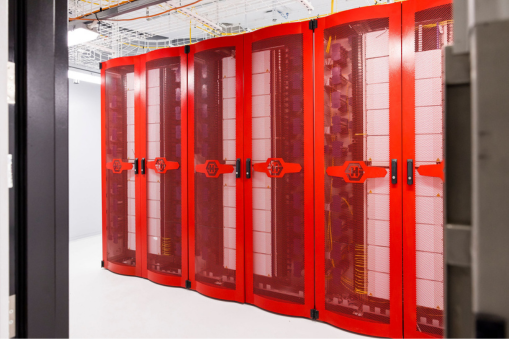
Customer architectures are changing visibly. Rack densities five to ten times higher than three years ago for AI workloads. Direct liquid to chip cooling moving from exception to standard. NVIDIA’s Vera Rubin platform now specifies 45-degree-celsius water cooling.
The facilities that can meet that specification today are a small subset of global capacity. Capacity reservations are running multiple years ahead of physical delivery. That is unusual in this industry. It tells you something specific about how seriously customers are taking the supply-side constraint.
You’ve led NEXTDC for more than a decade through multiple market cycles. What’s the best lesson the business has taught you?
After 14-plus years as a public company CEO, the number one observation is the market consistently underestimates the duration and scale of structural shifts. People want the change to happen in a year and it can take ten. It was always coming but the exponential in the curve is later in the climb. When we started, the consensus was that Australian enterprise would take 20 years to move to cloud. They were already moving. The customers were ahead of the consensus by a margin that is hard to imagine looking back.
AI is in the same place now. The consensus says scale takes time. The rate of change is speeding up and the old playbook for running a company will change rapidly in the new industrial revolution. The lesson from cloud is that the consensus is going to be wrong again by an order of magnitude. Maybe two.
The second lesson is conviction at the right moments. Three or four times in NEXTDC’s history, the temptation was to wait for clarity before committing. The right call every time was to commit before consensus caught up. You have to be prepared to take considered risks.
The third lesson is unglamorous. Culture and execution are the moat. Strategy is necessary but rarely the differentiator. Building quality products, on time, repeatedly, across a decade is what makes a company defensible. Consistent and reliable partners are ones you can trust.
What does Australia need to do in the next five years to avoid falling behind in the global AI infrastructure race?
Australia is one decision away from being a globally significant AI infrastructure hub. And one decision away from being a customer of capacity built elsewhere. The next year or two will decide which.
The comparison is concrete. Malaysia approves a hyperscale data centre in four months. In NSW, the same approval can take years. What we need is faster planning approvals, accelerated transmission investment and predictable grid connection processes. We need every energy source on the table, as well as reform of copyright law or workable compensation agreements to permit AI training onshore. Stronger sovereign capability development and clearer national coordination on AI infrastructure priorities are a must.
"Australia is one decision away from being a globally significant AI infrastructure hub. And one decision away from being a customer of capacity built elsewhere."
Final reflection. Everyone is debating the jobs AI will replace. What is the story being missed?
The big growth story in all this is the jobs AI cannot happen without. It’s the huge demand for skilled trades it is creating.
I see it on the ground. Across NEXTDC development sites in Australia and Malaysia, we already have 1,000-plus construction and development workers on site each day at individual campuses, physically building the infrastructure the AI economy runs on. Ten thousand jobs right now though our projects.
NEXTDC’s S4 and S7 developments in western Sydney will need thousands of skilled jobs across engineering, construction, energy and operations. Yet research shows four in every ten Australian data centre roles are in shortage. The Australian operational workforce needs to grow from around 9,600 today to 17,900 by 2030.
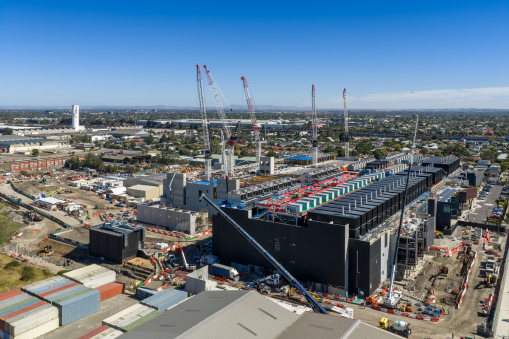
Australia has executed industrial transformations at this scale before. Mining. LNG. Solar. Wind. The AI infrastructure cycle now underway ranks alongside the most capital-intensive build-outs in our history. But the hardest constraint is not capital. Capital is abundant. Demand is proven. The real constraint is people. Training enough electricians, technicians, engineers, project managers and operators to build, energise, commission and operate this infrastructure at the required speed and scale is becoming one of the defining challenges of the decade. The one input that does not scale on demand is the years required to train, certify and develop the skilled workforce needed to deliver one of the largest infrastructure build-outs of the modern era.
The economic productivity of the work matters. The tech sector, including data centres, produces A$12.6 billion of gross value added per terawatt hour of energy consumed. Higher than mining. Higher than manufacturing. The countries that win this cycle will not just produce intelligence. They will produce the workforce capable of building the systems behind it.
About the author
Disclaimer
Independent advice from an Australian financial services licensee is needed before making financial decisions. This is not intended to be financial product advice. To the extent permitted by law, ASX Limited ABN 98 008 624 691 and its related bodies corporate excludes all liability for any loss or damage arising in any way including by way of negligence.
© Copyright ASX Operations Pty Limited ABN 42 004 523 782. All rights reserved 2026.