• publish

Module 9: Index options

Index options allow you to trade the whole market in one transaction. ASX offers options over three share price indices, giving you broad exposure in one trade. This module explains how you can use index options to get leveraged exposure to a rising or falling market, or to protect a diversified portfolio from a fall in value.

Topic 1: Why trade index options?

As well as share options, ASX lists options over share price indices.

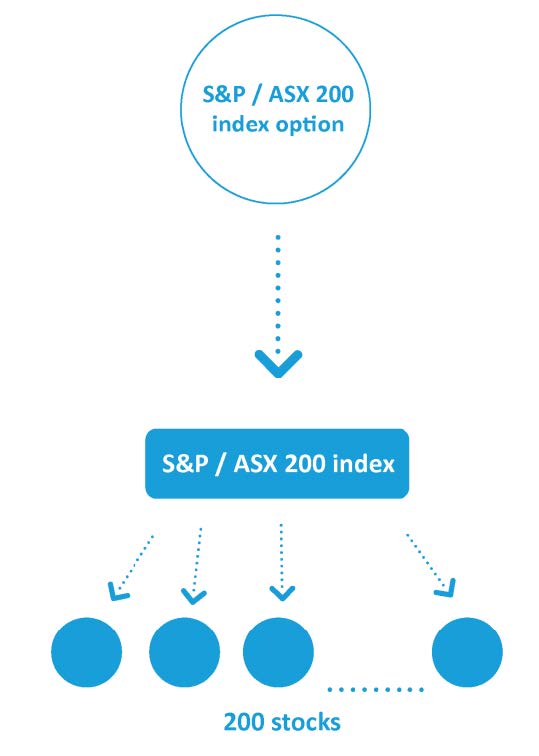
Index options provide exposure to the market as a whole, or to a broad market sector. You can gain exposure to a wide range of shares in one transaction.

ASX currently lists options over:

  • S&P/ASX 200 index (ASX code: XJO)

Let's look at why you might use index options.


Trade the direction of the index

Trading an index option gives you broad market exposure in one transaction.

If you have a view on the market as a whole, you can trade that view using index options, rather than trying to replicate it with a number of different option positions across different stocks.

Leveraged exposure

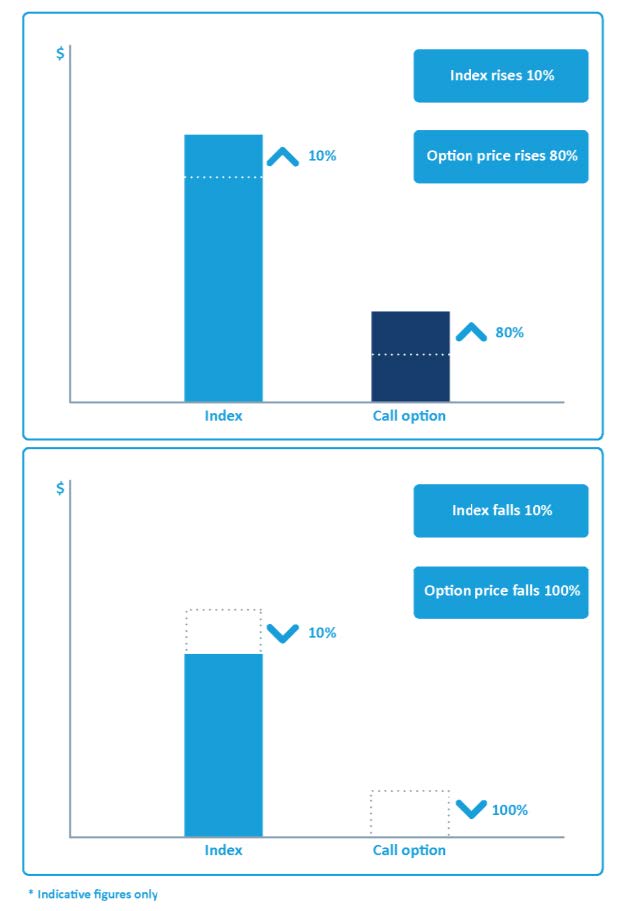
Index options give you leveraged exposure to market movements.

The idea is the same as using stock options to get leveraged exposure to movements in the price of a single stock.

If the index moves favourably, your percentage returns from buying an index option can be much higher than the percentage movement in the index.

If the index moves unfavourably, your losses will also be magnified.

Protect a share portfolio

You can use index options to protect a diversified share portfolio.

The principle is the same as using share options to protect your holding of a single stock against a fall in the share price, a strategy covered in Module 7: Protect your shares.

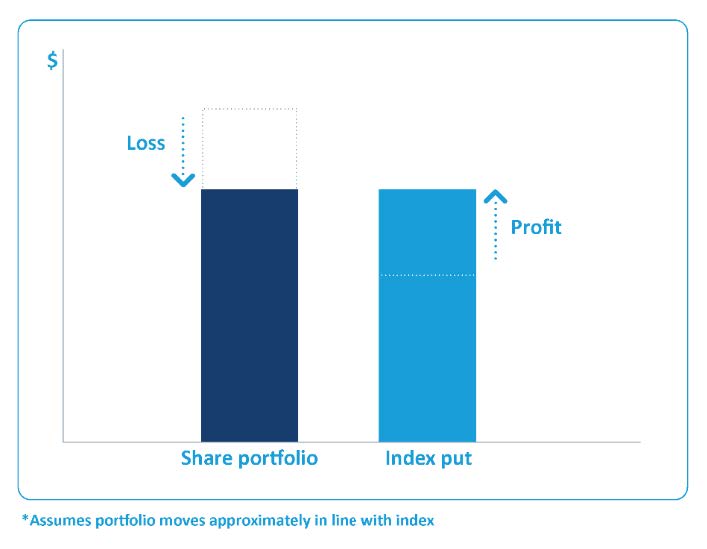
If you fear a fall in the broad share market, buying index puts provides potential protection for your portfolio. This can be achieved in a single transaction, as opposed to protecting all your stocks individually with share options.

Tracking risk can be an issue when using index options for protection. This is because there will generally be a difference between the performance of the index and the performance of your portfolio.

Topic 2: How index options differ from share options

Contract multiplier

The exercise level and premium of an index option is expressed in points.

A contract multiplier of $10 per point is used to convert into dollars.

Example

September 8,600 XJO call @ 55 points.

To buy this option, you pay a premium of $550 (55 points x $10).

The face, or exercise, value of this option is $86,000 (8,600 points x $10).


European exercise

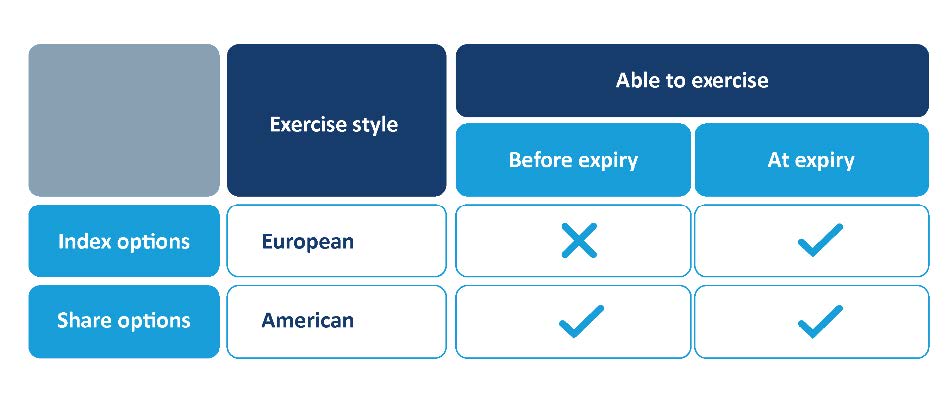
Index options are European exercise, meaning they can be exercised only on the expiry day.

In contrast, share options are American exercise, meaning they can be exercised at any time.

Although you may not exercise an index option before expiry, you can close out your position at any time.

Expiry cycle

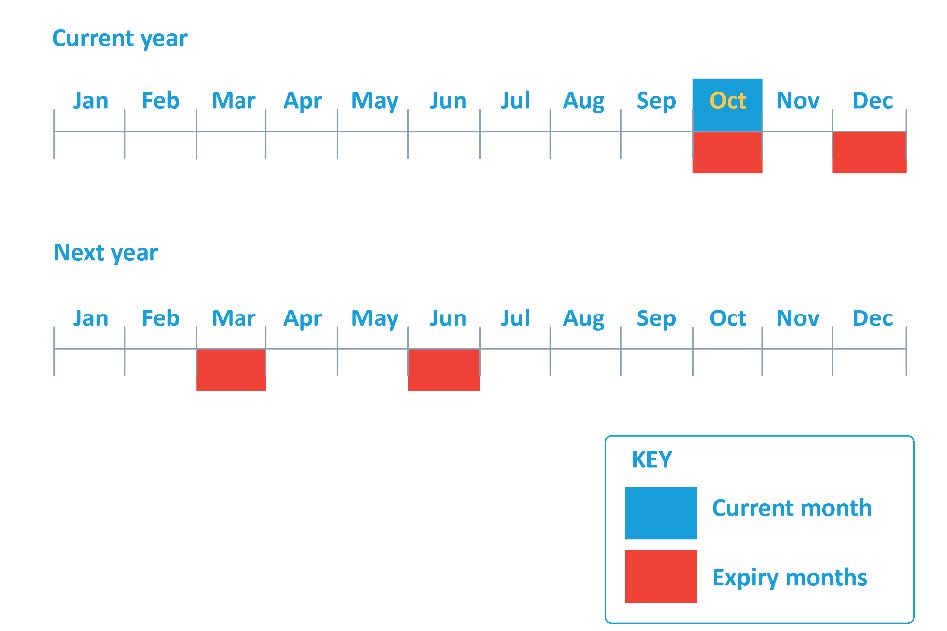
Index options are listed with expiries in March, June, September and December, up to six quarters ahead. Expiries in the spot (current) and next month are also listed for S&P/ASX 200 options.

Index options have a different expiry date to stock options.

The expiry date is the third Thursday of the expiry month, as long as this is a business day

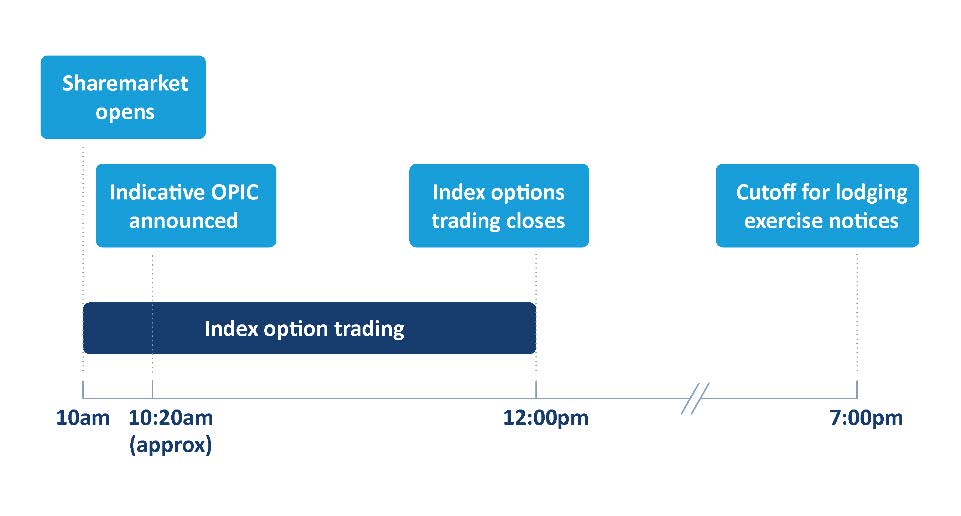
Trading ceases at 12 noon on the expiry date.

Cash settlement

ASX index options are cash-settled.

You cannot physically 'receive' or 'deliver' the underlying index the way you receive or deliver shares when you exercise a share option.

When you exercise an in-the-money index option, you receive a cash payment.

Even though index options are cash settled, they are not automatically exercised at expiry, unless you have told your broker to set your index option positions to auto- exercise.

The cash payment is the option's intrinsic value, which depends on the level of the index - specifically, the Opening Price Index Calculation (OPIC) - on expiry day.

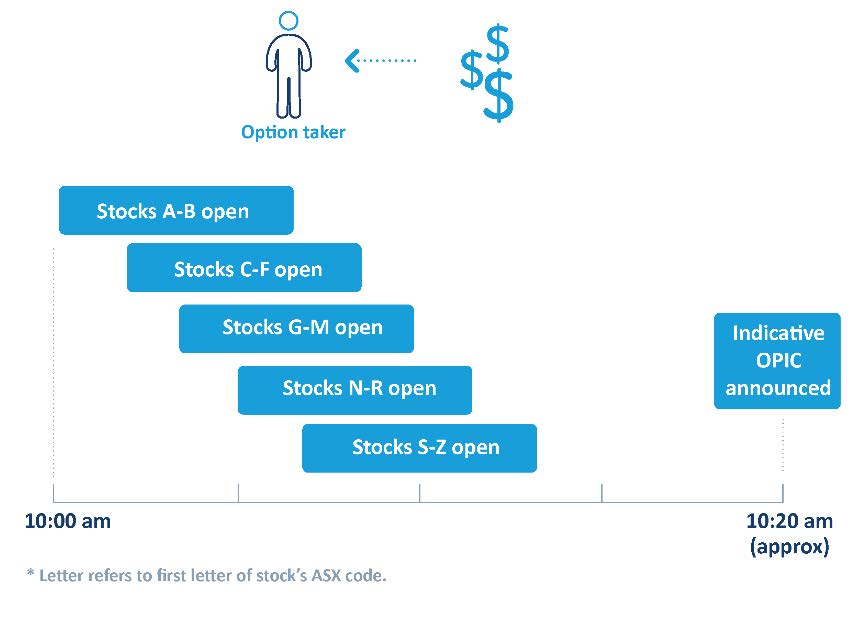
The OPIC is based on the opening price of each stock in the index, not the closing price. The OPIC is not based on the opening index value at 10am.

ASX staggers the opening of stocks. As trading in each stock begins the first traded price is recorded. Once all stocks have opened the OPIC is calculated using these opening prices.

The settlement amount is the difference between the option's exercise level and the OPIC, multiplied by the contract multiplier.

An indicative OPIC is announced at around 10.20am on the morning of the expiry day.

Trading continues until noon, giving traders who do not wish to exercise their options, or who prefer not to be exercised, the opportunity to trade out of their positions.

Example

You buy a March 8,500 XJO call option.

The OPIC on expiry day is calculated as 8,600 points.

Settlement amount for an in-the-money call:

  • (OPIC - exercise level) x contract multiplier
  • (8,600 - 8,500) x $10 = $1,000

You receive this amount the day after exercise.

Topic 3: Profit from a rising market

Buying an index call gives you leveraged exposure to a rise in the index.

The principle is the same as buying a share call option to get exposure to a rise in a single stock (refer to Module 5: Profit from a rising share price).

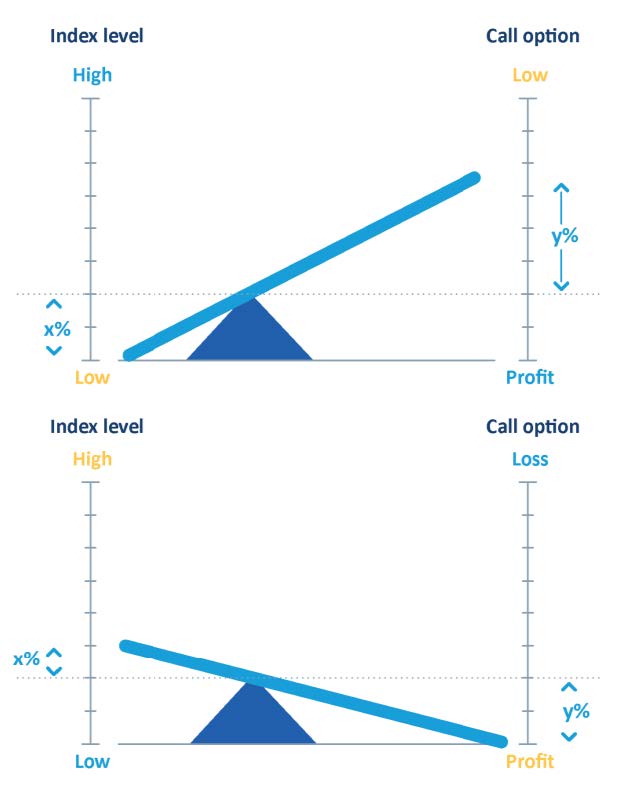
Because an index option costs a fraction of the value of the index, a small movement in the index results in a larger change, in percentage terms, in the option price.

If rises the index, the call should produce leveraged returns. The higher the index rises, the greater your profit.

Example

Profits and losses

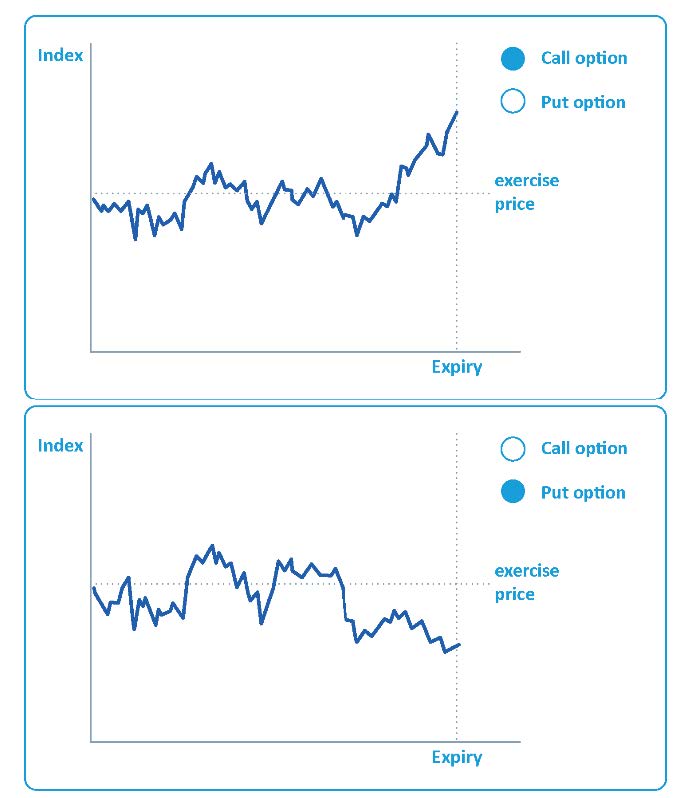
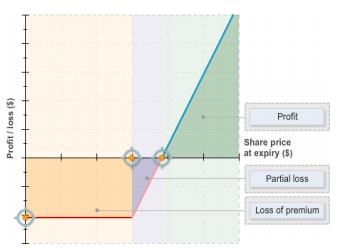
The most you can lose is the premium. You will make this loss if at expiry the index (technically, the OPIC) is at or below the exercise level.

If the index is above the exercise level, the option will have intrinsic value. The higher the index is, the more the option will be worth.

Your profit/loss is intrinsic value less the premium you paid.

The breakeven point at expiry is the exercise level plus the premium paid. At this point, the option is worth what you paid for it.

Above the breakeven, you will make a profit - the higher the index, the greater the profit.


Outcome 1 - index rises

March 8,400 XJO @115 points

At expiry, the index has risen to 8,600 points. The 8,400 call is worth 200 points (intrinsic value).

The 2.3% increase in the index has resulted in a 74% increase in the value of the call.

Your profit is 85 points = $850.

The index has moved favourably and leverage has increased your returns.

At expiry, you can either exercise the call or sell it - the profit you realise should be the same.

(If you decide to take profits before expiry, you can do so by selling the option.)


Outcome 2 - index falls

March 8,400 XJO @115 points

Leverage works both ways. If the index falls, the call option will suffer magnified losses in percentage terms.

A fall in the index of 200 points represents a decline of 2.3%.

Your 8,400 call will be out of the money and expire worthless. Your loss is 100%.

It's important to be clear that leverage refers to changes in percentage terms.

In terms of points, the change in the index can be expected to be more than the change in the option's value.


Risks
The main risk of buying an index call is that the index does not rise.

If the index falls, or stays steady, the option will fall in value. If at expiry the index is below the exercise level, the call will expire worthless.

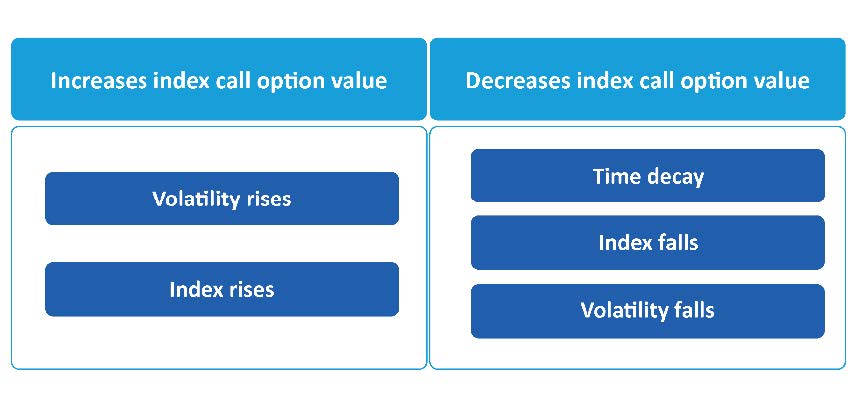
A fall in volatility also hurts the bought call. If implied volatility falls after you buy a call, you can lose money - even if the index has risen moderately.

Time decay works against you. The premium you pay for the option includes time value. At expiry, the option consists only of intrinsic value. To make a profit, the index must have risen far enough to cover the time value lost.

Topic 4: Profit from a falling market

Buying index puts provides leveraged exposure to a fall in the index.

The principle is the same as buying puts to speculate on a fall in the price of a single stock, discussed in Module 6: Profit from a falling share price.

Here, your view is on the broad market, rather than a particular stock.

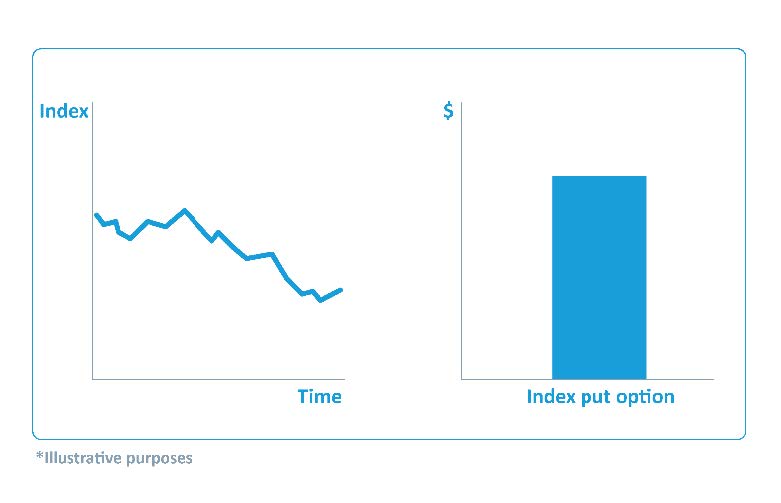
If the index falls, the puts should increase in value. The further the index falls, the greater the potential profit.

Example


Profits and losses

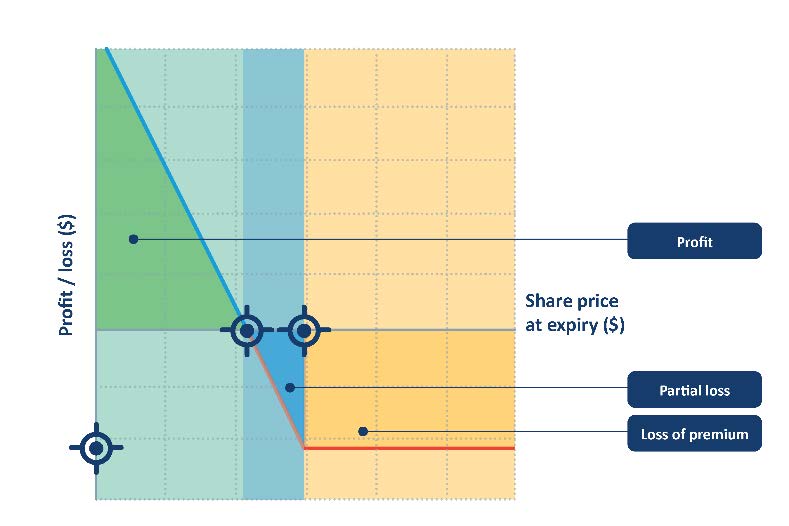
The most you can lose buying an index put is the premium. You will incur this loss if at expiry the index (technically, the OPIC) is at or above the exercise level.

If the index is below the exercise level, the option is in the money. The lower the index, the higher the option's intrinsic value.

Your profit/loss is the intrinsic value less the premium you paid.

The breakeven point at expiry is the exercise level less the premium paid.

Below the breakeven, you will make a profit - the lower the index, the greater your profit.

Outcome 1 - index falls

At expiry, the index has fallen to 8,200 points. The 8,400 put is worth 200 points (intrinsic value).

The table opposite compares the return from the option with the fall in the index. The 2.4% fall in the index has resulted in a 100% increase in the value of the put.

Your profit is 100 points = $1,000.

At expiry, you can exercise the put, in which case you receive a cash payment of intrinsic value, or you can sell the put up until 12 noon. Either way your profit should be the same.


Outcome 2 - index rises

Leverage magnifies profits and losses. If the index rises, the loss on the put will be greater in percentage terms than the movement in the index.

A rise in the index of 200 points is an increase of 2.4%.

Your 8,400 put will be out of the money and expire worthless. Your loss is 100%.

If the index shows signs of strength after you have bought your put, you have the choice of selling the option while it is still has time value, or holding the position until expiry in the hope the market falls back.


Risks

The main risk of buying an index put is that the index does not fall.

If the index rises, or stays steady, the option will lose value. If at expiry the index is above the strike level, the put will expire worthless.

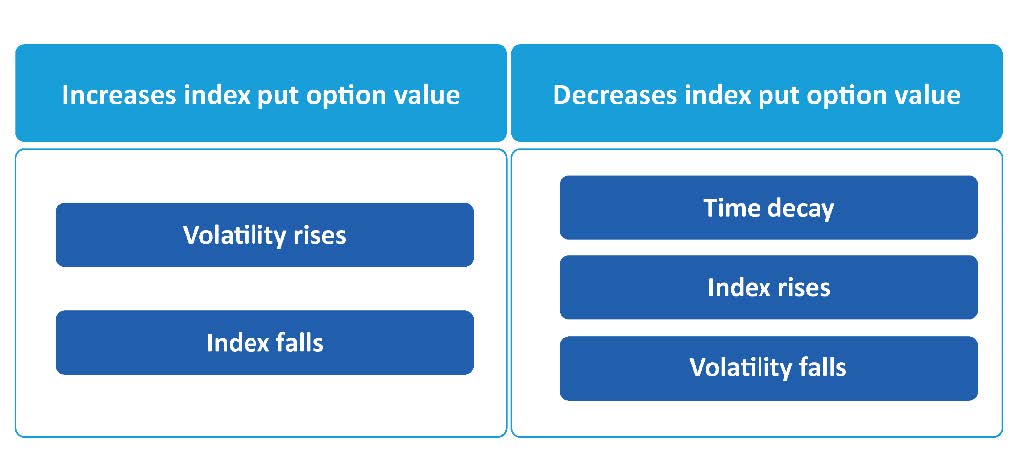
As with the bought call, your position will be hurt by time decay and a fall in volatility.

No matter how much the index rises, however the most you can lose is the premium you paid.

Topic 5: Protect your share portfolio

In the previous topic we looked at buying index puts to profit from a fall in the index.

Index puts can also be used to protect a diversified share portfolio.

If you fear a fall in the broad market, index puts may provide protection with one transaction, rather than separately buying puts over each of the stocks in your portfolio.

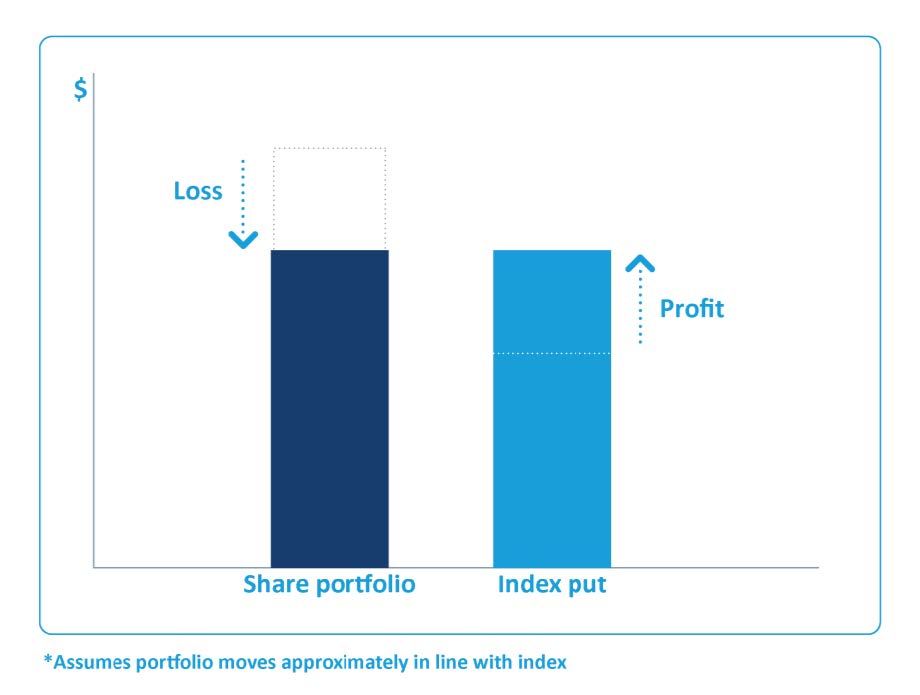
As the market falls, your index puts will increase in value, providing potential to offset loss on your portfolio.

Module 7: Protect your shares, explains how to buy a share put option to protect a single shareholding.

Example


Outcome 1 - index falls

By expiry, the S&P/ASX 200 index has fallen 10% to 8,060 points. Your portfolio has declined in line with the index, and is now worth $806,000.

Your index puts have increased in value and are worth 340 points at expiry.

You can either sell your puts or exercise them and receive a cash payment.

Although your portfolio has fallen by $34,000, the profit from the options trade limits your net loss to $10,000.

By expiry, the S&P/ASX 200 index has fallen 10% to 8,060 points. Your portfolio has declined in line with the index, and is now worth $806,000.

Your index puts have increased in value and are worth 340 points at expiry.

You can either sell your puts or exercise them and receive a cash payment.

Although your portfolio has fallen by $34,000, the profit from the options trade limits your net loss to $10,000.


Outcome 2 - index rises

Contrary to your expectations, the index rises and at expiry is at 8,740 points. Your portfolio has risen in line with the index and is now worth $874,000.

Your index puts are out of the money and expire worthless.

Although you have lost the premium you paid for the options, your portfolio has still been able to benefit from the rise in the market.


Tracking risk

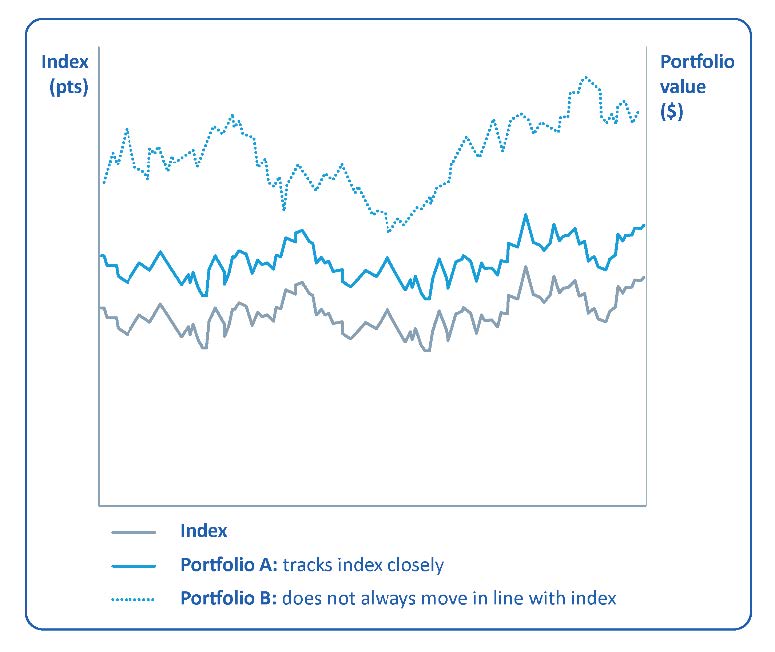
The success of this strategy depends partly on how closely your portfolio tracks the index.

The previous examples assume that your portfolio moves exactly in line with the index.

In practice, this is unlikely. Your shareholdings will not replicate the index, and so may under- or out-perform the index.

However, if your portfolio is well diversified, it should move roughly in line with the market as a whole, and buying index puts can be one way to protect yourself in a market downturn.

How do you know if your portfolio tracks the index?

Some software packages calculate the correlation between the value of your portfolio and the market index.

But you can get a reasonable idea just by checking the percentage movements in the value of your portfolio against the percentage movement in the index for a few days. This should tell you whether or not your portfolio tends to move in the same direction, and to the same extent, as the index.

Topic 6: Earning income from your share portfolio

Module 8: Earn income from your shares, explains how writing call options can generate income from a single shareholding.

Writing index calls works the same way. If you have a view that the market will move sideways then you can write an index call to earn income.

This strategy requires one transaction only, rather than separately writing calls over each of the stocks in your portfolio. You can use cash or eligible shares or other collateral from your portfolio as cover for the written position but unless your portfolio tracks the index exactly you may have to pay margins if the market moves against your written position.

Index options are European - they can only be exercised at expiry. And if the option is exercised, settlement is in cash - so you have no risk of losing your shares.

If an index option is exercised you must pay cash reflecting the difference between the strike price of the option and the settlement level of the index (the OPIC).

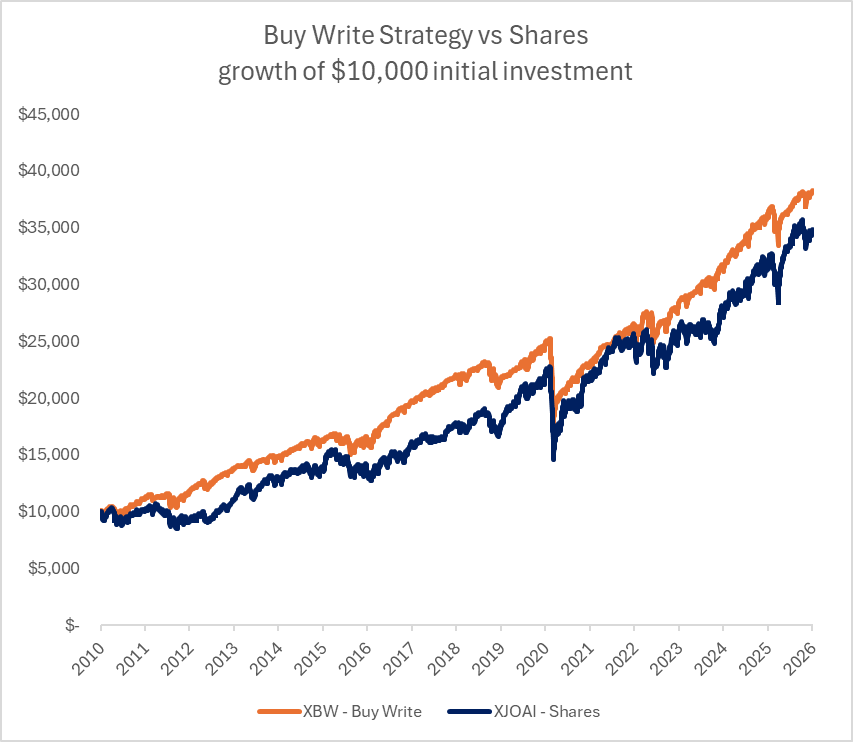
To view the long term performance of regularly applying this strategy view the buy - write index page.

Buy Write Strategy vs Shares growth of $10,000 initial investment

Example


Outcome 1 - index remains steady

At expiry, the ASX 200 index closes at 8,000 points. Your portfolio has remained steady, and is still worth $800,000.

Your index calls expire worthless. You keep the $10,000 in income you received from writing the call.


Outcome 2 - index increases in value

At expiry, the ASX 200 index closes at 8,200 points. Your portfolio has increased in value in line with the index, and is now worth $820,000.

The written index calls you wrote have risen to 200 points or $20,000. Unless you buy back the calls you will be required to pay $20,000.

You portfolio remains intact but the strategy costs you $10,000 in opportunity cost.


Summary

Index options offer exposure to the market as a whole, or to a market sector, in one transaction.

You can use index options to trade your view on the index, just as you use share options to trade a view on a particular stock.

ASX lists options over the S&P/ASX 200 Index. The S&P/ASX 200 contract is the most actively traded.

Index options:

  • Cash settled
  • European exercise
  • Contract multiplier of $10/point.

Strategies include:

  • Buying index calls to get leveraged exposure to a rise in the market
  • Buying index puts to get leveraged exposure to a fall in the market
  • Buying index puts to protect a diversified share portfolio
  • Writing index calls to generate income.

Test your knowledge